From chat window to orchestra
How my way of building software changed five times in ten months, and how AI went from a chat window to my partner.

“It’s 2026 and you’re only now using AI?” It’s a fair question, so let me answer it first.
I’m not new to AI. My master’s project in 2002 was a small economy of software agents that bid for the right to act. For years after that there was little AI a small business could use, so I built my own versions of the maths into iStyles. Our recommendation engine weighs popularity signals to decide which designs lead our pages, and our shipping calculator learned from the real cost of every order. At their core, both work like a single artificial neuron: weigh the inputs, then adjust from the results.
Then the field moved fast. Google’s Transformer arrived in 2017 and BERT a year later, and ChatGPT took AI mainstream at the end of 2022. From 2023 I used it like everyone else, as a chatbot, and out of curiosity explored what sits behind it: large language model apps, vector databases, prompt engineering, AI agents. The answers got better every year.
But a chatbot could explain an error. It couldn’t move a server or fix a bug in a twenty-year-old e-commerce store. In 2026 that changed, and so did how much I could get done in a day. I came to it with a solid foundation: twenty years of building software, a business to run and an early grounding in AI. I judge AI by what it gets done, and I’m still learning every week. This is how it went from a chat window to my partner, one step at a time.
Why I held out
For twenty years I worked in an editor: BBEdit, then Sublime Text, then VS Code. I could see every file, every change, every line, and I held on to that sense of control. So when people told me to try an AI agent that works from the command line, my answer was polite and firm: not for me. A terminal with no editor felt like losing sight of my own code.
It took me most of this year to see that I had the wrong idea of control. Each step felt like the biggest leap I would see. Each time, the next one was bigger, and it came sooner.
January: the chat window
At the start of 2026, iStyles still ran on servers we had rented for twelve years. I decided to move everything to Google Cloud: containers, automated deployments, tighter security, a new firewall setup. For a traditional engineering team, that is a project of several months.
I did it with Gemini, in the most basic way possible: questions in a chat window, answers copied into my editor, errors pasted back. From planning in January to going live at the end of February took about a month. Soon after, a botnet sent around 7,000 active users every half hour at the new setup. Our old servers would have collapsed before 500. The new one didn’t slow down.
I was amazed. Looking back, it was the slowest way I will ever use AI again.
March: AI moves into the editor
In March, with the migration done, I started coding in Google Antigravity, an editor built around an AI agent. The AI no longer waited for me to paste things in. It read my files, made changes where I was working and called a few tools. I stopped being the clipboard between the AI and my code, and that alone was transformational.
May: agents that reach beyond the code
In May I moved to Cursor. The agent could search the whole codebase, run commands and check its own work. More than that, it reached outside the code: through connectors it called services such as Stripe, our payment provider, so it worked from real data instead of guessing from the code. That was so much more useful.
I tried several models there, and xAI’s Grok models worked well, but I preferred the reasoning of Claude models, and I went over my plan on extra usage so often that I began to wonder whether I’d be better off using Claude Code directly. Opus was great. Fable 5 was revolutionary: so smart, and able to do so much on its own. So Claude became my choice after months of working with the others every day, and each of them taught me something.
September: Claude Code, still in my comfort zone
In September I finally tried Claude Code, the kind of command-line agent I had held out against. But I opened it as an extension inside VS Code, because that looked like the way I already worked. It could do much more, yet I was still in the same chair, watching one agent at a time, line by line.
That is the trap. The familiar setup feels safe, and it quietly holds back the change.
October: a partner, and an orchestra
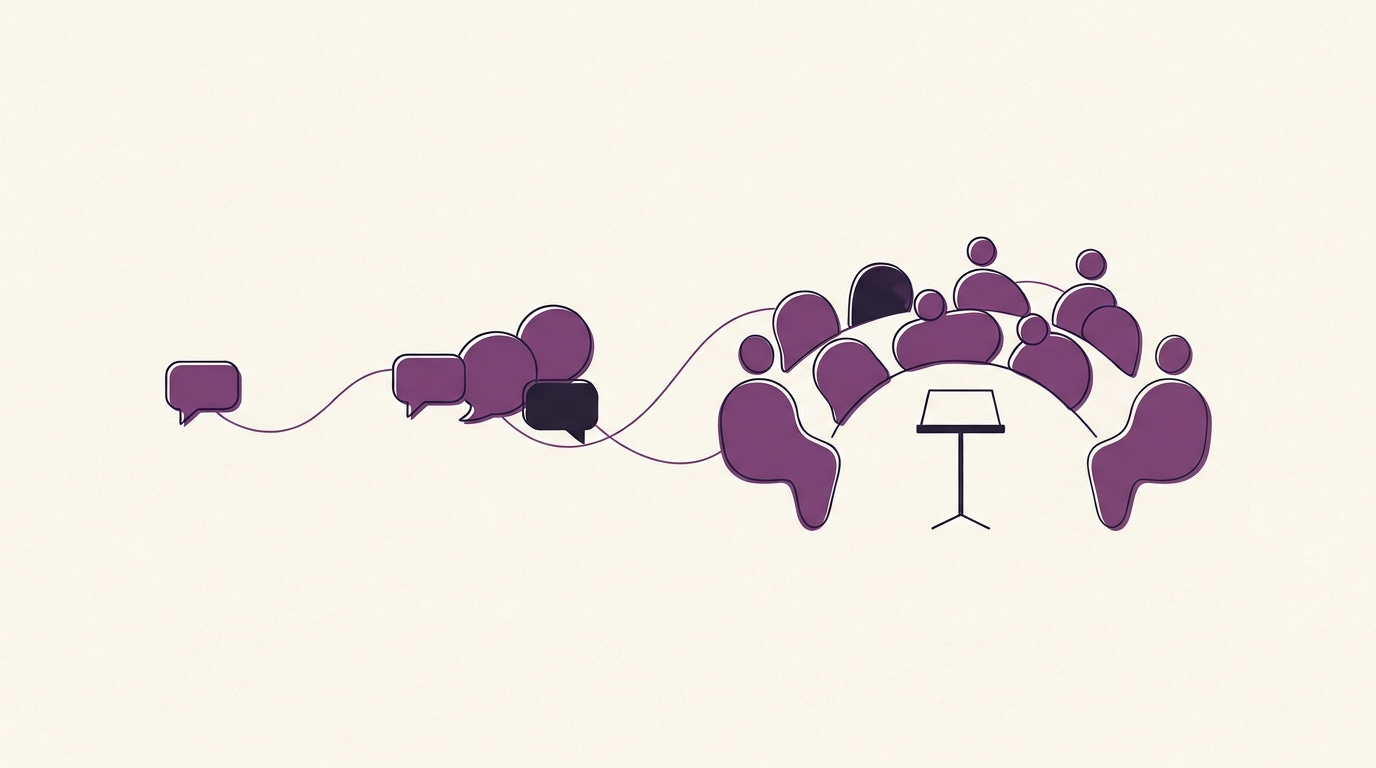
The real shift came in October, when I moved the work into a Claude Project with its own cloud environment, including a copy of the store where every change can be tried before it reaches a customer. Several Claude sessions now work on the same codebase at once, each in its own thread with its own job, with a shared memory of the project behind them. Cursor’s cloud agents run side by side too; for me the difference was the orchestration around them. Claude also connects to almost every service we use, so it can read the logs, check the transactions and see the big picture before it drills down to fix or improve something.
This is where AI stopped feeling like a tool and started feeling like a partner. Every piece of work starts as an issue in Linear, our project management tool: what we want, why, and how we’ll know it’s done. What I bring is twenty years inside this business: our customers, our history and a sense of how things should work. What Claude brings is knowledge wider than any one person could hold, and the patience to go through every log and every line of code. We trade ideas and challenge each other’s thinking, and we usually end up somewhere better than either of us would have reached alone.
The model underneath has moved on too: Opus 5.5 works better than the Fable 5 that amazed me in May, without needing stacks of money lit with rocket fuel to power it. That cloud move from January took about a month. With today’s setup, I think it would take about a week.
November: the next jump
Even as I wrote this, the next jump arrived. On 9 November Anthropic released Claude Fable 5.2, which it describes as a step above Opus 5.5 in almost everything it measured. I gave it a complex task: our social posting setup, built in layers over two years across two large automations, a rulebook in Google Sheets that reworked every post to suit each platform’s rules, and a database, all wired to a long list of other services. I asked it to study the whole system, then design and tune the AI that would take over the writing: posts shaped around what each channel’s audience responds to, paired with the hashtags that perform there. One AI, engineered by another.
It read every part before proposing anything and found problems nobody had asked about. Then it tested instead of assuming. It ran three of our real campaigns through its new design on a copy of the setup. When I suspected that two separate AI steps would beat one, it tested my hunch too: both versions, judged blind, each round run twice with the order swapped so neither got an edge from going first. Then it reported back like a good engineer: a page with today’s post next to the new one for every channel, the scores, and a verdict.
About an hour after I asked, one caption had become thirteen posts, each specially crafted for the people on its channel, and it was live. That story gets its own article in a few weeks. It’s the clearest sign yet that each jump comes sooner than the last.
What I learned
Setup, context and the right model all matter. Each new model raised the ceiling, and Fable 5.2 has just raised it again. But every model did its best work when the setup around it was right, it had the context it needed, and I had picked the right one for the job. The biggest jumps came when all three moved together.
Trust comes from structure, not from watching. What lets me trust the work now isn’t seeing every line. It’s a plan for each job, written rules every session reads, a safe copy of the store to try things on, and a review before anything goes live. I didn’t give up control; I moved it to where it matters.
Comfort is the bottleneck. Every step I delayed, I delayed because the old way felt safer. Each time, the new way was better within days.
AI multiplies what you bring. If you started by vibe coding, you already know how much AI can build from a good description. The next step is what makes it last: plan the work, break it into small pieces, write down how your project works and lay the foundations first. AI is a great partner for that part too.
The impossible is now on the plan. AI removes the limits of how we used to work. It multiplies what we can do by more than I know how to measure, and projects I once filed under “impossible” are now simply next on the list.
One thing to copy
If I could go back to January, I’d start with structure: tell my AI partner what the project is, what it may do on its own and what waits for me. You can do that today, with any AI tool.
Paste this into a new chat in a Claude Project or ChatGPT Project, or into a plain Gemini chat. It asks six short questions, then drafts the instructions your AI reads at the start of every conversation. Paste the draft into the project’s instructions, or into the instructions of a new Gem in Gemini. In Claude Code, Codex or Cursor, run it in your project folder and it can save the result as CLAUDE.md or AGENTS.md once you say yes.
I'd like you to be my AI partner on [my project or business]. Before we start any real work, help me write the instructions you'll read at the start of every conversation.

Interview me first. Ask one short question at a time, and wait for each answer:
1. What is the project, and who is it for?
2. Which tools and services do I use for it?
3. What do I want help with first?
4. What may you do on your own, and what must wait for my OK?
5. What must you never do or touch?
6. How do I like to work (tone, level of detail, when you should ask)?

Then draft the instructions in plain words, under 400 words:
- a short description of the project
- our working rules, including what needs my OK
- one conversation per job, each with a clear goal and finish line
- three small first jobs we could finish this week

Show me the draft and wait. Don't save, send or change anything until I say yes. If my answers clash, ask me which one wins. If I paste passwords, keys or anyone's personal details, pause and remind me to remove them.
Start with one of the three first jobs it suggests. When a job is done, start the next one in a fresh conversation.
What’s next
I run all of this on a Claude subscription, so like most of you I watch session and weekly limits, sometimes a little too closely. Next time I’ll share how I optimize AI cost on a plan like that: break the work into pieces and give each thread what it needs, and nothing more. It stretches your limits further and, perhaps surprisingly, gets you better answers, whichever AI you use.
I’m learning too, and I’d like to hear where you are on this path. Reply to this email and it comes straight to me, or leave a comment below. Subscribe to get the next article in your inbox or the Substack app.
Michael Kuan runs iStyles.com, which makes Skins for phones, laptops, gaming consoles, tablets and drones in over a thousand designs.
Discussion about this post